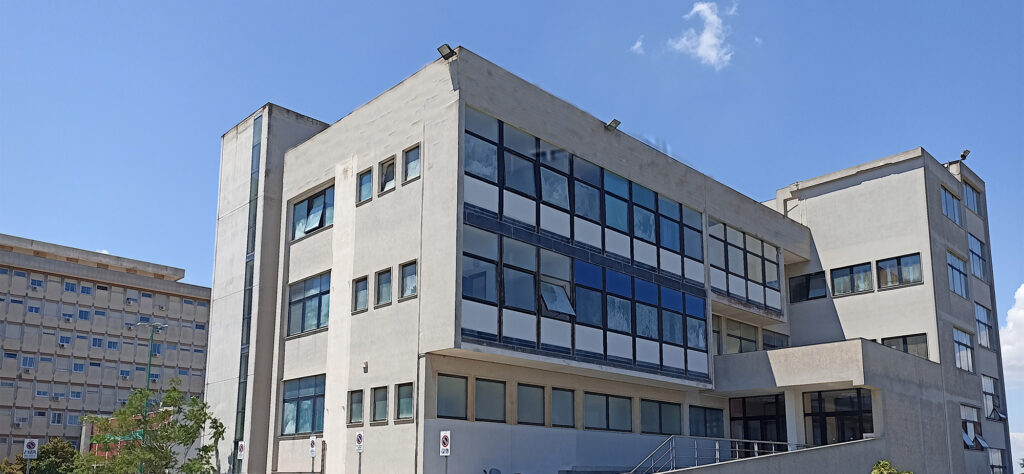
The Center for Interdisciplinary Research on Language (CRIL) investigates the neurobiological bases of speech perception and production—both in healthy and pathological speakers—using various methodologies and different levels of analysis. This perspective is pursued integrating neurophysiological data with acoustic and articulatory data.
Our aim is to verify classical ontologies developed by linguistic theories at the light of diversified empirical evidence, so that theories and data can be informed mutually. The final goal is the development of inter-theoretic frameworks able to explain speech and language computations and representations in the brain.
The results of our research also align with the interests of applied research, such as forensic linguistics, an interdisciplinary field that uses the analysis of speech and voice patterns to provide evidence in legal cases, enhancing the accuracy of crime investigations.
These lines of research are supported by three interconnected laboratories: the Neurobiology of LanguageLaboratory (NLL), the Acoustic-Articulatory Laboratory (AAL), and the Forensic Linguistics Laboratory (FLL).
At the CRIL neurophysiological and kinematic data can be acquired in a synchronized way. We can monitor the activity of cerebral cortex, using Electroencephalography and/or Transcranial Magnetic Stimulation systems, and in parallel exploit the complex activity of the phonatory apparatus—larynx, tongue, lips, but also orofacial muscles—thanks to Ultrasound systems, Electromagnetic Articulography and Laryngography. In addition, eye movements during audio-visual tasks in various communicative contexts can be studied using an Eye Tracking System
The CRIL, therefore, is an ideal place to identify borderline research spaces, not yet well delineated, between linguistic, medical, computer science, engineering and neurophysiological disciplines that, although starting from different theories and methodological traditions, are interested in studying the biological nature of human language, its pathologies, the processes involved in first and second languages acquisition, as well as dialectal variation.
The CRIL, based in the Department of Human Studies at the University of Salento, was set up thanks to EU Funds under the National Operative Program (NOP) 2000-2006—Scientific Research, Technological Development, Higher Education—for regions listed in objective 1 (Directorial Decree of the Ministry for Education and Research, MIUR, number 1312, 09.07.2003). The Center was opened in early 2007.
The Research Center is located within the Vito Fazzi Hospital in Lecce.